Infection prevention and control (IPC) is a fundamental part of running a safe care home. For older people, many of whom live with conditions that affect their immune system, infections that would be manageable for a younger healthy adult can become serious or life-threatening very quickly. Families choosing a care home in Leicester, Birmingham, Worcestershire, Berkshire or across Middlesex and Milton Keynes are right to ask how a home manages infection risk.
This article explains what robust infection prevention looks like, what the CQC expects, and how Blissful Care Homes approaches the safety of every resident across all six of our homes.
Why Infection Control Matters More in Care Settings
Care homes bring together groups of older people, many with complex health conditions, in shared living spaces. This creates a higher baseline risk of infection spreading than in independent living. Common infections in care home settings include urinary tract infections (UTIs), respiratory infections including influenza and pneumonia, norovirus and other gastrointestinal illnesses, skin and wound infections, COVID-19 and its variants, and Clostridioides difficile (C. diff).
The difference between a well-managed care home and a poorly managed one often comes down to the consistency and rigour of daily infection control habits, not just what happens during an outbreak.
The Legal and Regulatory Framework
Infection prevention and control in care homes is governed by a combination of legislation and regulatory guidance:
- The Health and Social Care Act 2008 (Regulated Activities) Regulations 2014 require registered providers to have effective systems to assess and manage the risk of infection
- NHS England and UKHSA publish detailed IPC guidance for health and social care settings, which care homes are expected to follow
- The CQC assesses infection control as part of its Safe inspections
- Every care home must have a named IPC lead responsible for overseeing compliance
Core Infection Prevention Practices
Hand Hygiene
Hand hygiene is the single most effective way to prevent infection spreading in a care home. Clear protocols must cover when and how hands must be washed or sanitised, including before and after every episode of personal care, before and after handling food, after contact with any potentially contaminated surface, and on entry to and exit from the building. Alcohol-based hand sanitiser should be available at entry points, in corridors and in all care areas.
Personal Protective Equipment
Appropriate PPE reduces the risk of cross-contamination between residents and between staff and residents. This includes disposable gloves for personal care and clinical tasks, aprons when providing hands-on care, fluid-resistant surgical masks in appropriate situations and eye protection where there is a risk of splashing. PPE must be disposed of correctly after each use and never reused between residents.
Environmental Cleaning
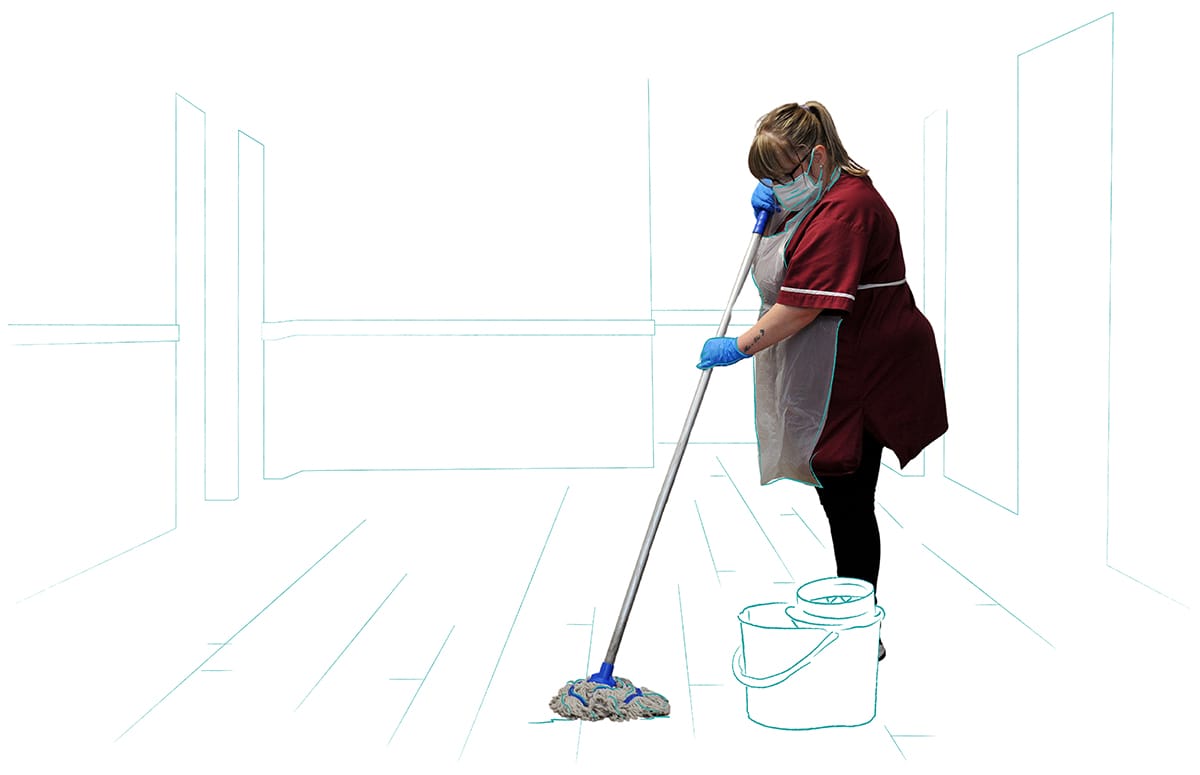
Good practice includes daily cleaning of all communal areas and high-touch surfaces such as door handles, handrails and light switches, deep cleaning of bedrooms between residents, regular cleaning of equipment such as hoists and wheelchairs, specific cleaning protocols for outbreak situations, and colour-coding of cleaning equipment to prevent cross-contamination between areas.
“At Blissful Care Homes, we follow strict infection control measures across all of our homes. From appropriate use of PPE to frequent deep cleaning and regular testing for both staff and residents, the safety of the people in our care is always our first priority.”
Blissful Care Homes
Laundry and Waste Management
Soiled linen must be segregated from clean linen, washed at appropriate temperatures and stored separately. Clinical and care waste must be disposed of separately from general waste. Sharps, used PPE and dressings require specific disposal procedures in line with current guidance.
Outbreak Management
When an infection outbreak occurs, the speed and quality of the response is critical. A well-prepared care home will have an outbreak management plan covering early identification and isolation of affected residents, immediate notification of the local health protection team, enhanced cleaning, restriction of non-essential visitors, clear communication with families, and staff cohorting where possible to prevent spread between affected and unaffected areas.
In the Midlands, our homes work alongside NHS England Midlands and the UK Health Security Agency regional teams. Coppermill Care in Harefield liaises with UKHSA South East. Local authority public health teams across Worcestershire, Leicestershire, Birmingham, West Berkshire and Milton Keynes all provide support during outbreaks. Families should expect a care home to communicate openly and promptly when an outbreak occurs.
Vaccination
Vaccination is one of the most powerful tools available for protecting residents. Good practice includes annual influenza vaccinations offered to all residents and staff, COVID-19 vaccinations and boosters in line with current national guidance, pneumococcal vaccination offered to eligible residents, and active encouragement and support for staff to maintain their own vaccination status. A care home that promotes vaccination among its workforce is demonstrating a genuine commitment to resident safety.
At a Glance: IPC Standards a Good Care Home Should Meet
| Area | What to Look For |
|---|---|
| Hand hygiene | Sanitiser stations throughout the building, visible protocols for staff |
| PPE | Gloves and aprons used for all personal care, disposed of between residents |
| Cleaning | Daily high-touch surface cleaning, colour-coded equipment, deep cleans between residents |
| Outbreak management | Written plan in place, staff trained, families notified promptly |
| Vaccination | Flu and COVID jabs offered to all residents and staff annually |
| IPC lead | Named person responsible for overseeing compliance and training |
Questions to Ask a Care Home About Infection Control
- Who is the designated IPC lead and what is their training?
- How often are infection control audits carried out?
- How does the home communicate with families during an outbreak?
- What is the home’s policy on staff working while unwell?
- How are agency or bank staff briefed on IPC protocols?
“Good infection control is not something you see in a policy document. You see it in how a home is cleaned, how staff move between residents, and how quickly a concern is acted on. At Blissful, it is part of the culture across all of our homes.”
Blissful Care Homes
Frequently Asked Questions
Can I visit if there is an infection outbreak at the home?
The home may ask you to postpone or modify your visit during an active outbreak in line with public health guidance. Any restrictions should be explained clearly and lifted as soon as the situation allows.
How do I know if a care home has had recent infection control issues?
CQC inspection reports are publicly available and flag any concerns identified during inspection. You can also ask the home directly about any recent outbreaks and how they were managed.
Are care home staff required to have flu vaccinations?
Flu vaccination is strongly encouraged and good homes make it easy for staff to be vaccinated. It is not currently a legal requirement for care home workers, but staff uptake rates are a reasonable indicator of a home’s commitment to resident safety.
What should I do if I am concerned about hygiene standards?
Raise the concern with the home manager in the first instance. If unsatisfied, contact the CQC at cqc.org.uk or your local authority adult social care team.
What is the role of the IPC lead?
The IPC lead is a named member of staff responsible for overseeing the home’s infection prevention and control practices. This includes maintaining and reviewing policies, delivering or organising staff training, conducting regular audits, and acting as the point of contact for infection-related concerns.
Find Out More
If you would like to understand how infection prevention is managed at our homes across Leicester, Birmingham, Worcestershire, Berkshire, Middlesex and Milton Keynes, our team is happy to talk you through our approach. We welcome visits and encourage families to ask the questions that matter most to them.
You may also find our articles on what to look for when choosing a care home and the types of care we provide helpful as you research your options.