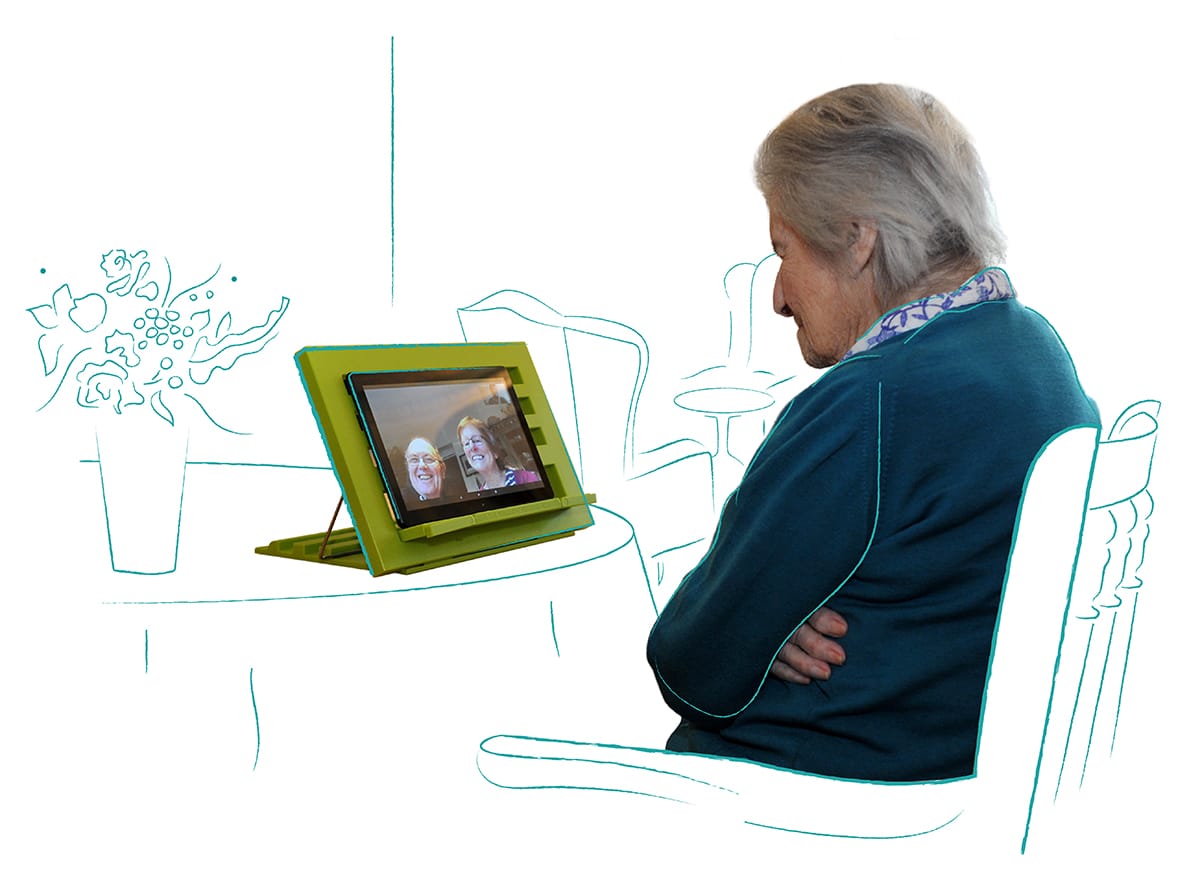
Activities are not a nice addition to dementia care. They are a clinical necessity. Meaningful occupation reduces agitation, supports cognitive function, lifts mood, maintains physical ability and gives people with dementia a continued sense of identity and purpose. The right activities, delivered in the right way, make a measurable difference to quality of life.
The challenge is finding what is genuinely meaningful for each individual. Activity in dementia care is not about filling time or keeping people busy. It is about connecting a person to who they are, what they have always loved, and what still brings them joy.
Why Activities Matter in Dementia Care
The evidence for the benefits of meaningful activity in dementia care is substantial. Engagement in purposeful activity has been shown to reduce anxiety and agitation, decrease the use of sedative medication, improve sleep, support physical mobility and reduce the risk of falls, and preserve cognitive and functional abilities for longer.
Beyond the clinical benefits, activities connect people with dementia to their sense of self at a time when that sense of self is under threat from the condition. A person who can no longer reliably recall recent events can still feel the pleasure of music they have loved for sixty years, the satisfaction of tending a plant, or the comfort of a familiar craft. These connections matter profoundly.
Understanding where a person is in the progression of their dementia shapes which activities are appropriate and how they need to be adapted. Our article on understanding the different stages of dementia explains how the condition changes over time and what this means for daily life.
The Principle of Person-Centred Activities
There is no single list of activities that works for everyone with dementia. What is meaningful to one person may be completely irrelevant to another. Effective activities in dementia care are always built around the individual, their life history, their personality, their interests and the things that have given them pleasure and purpose throughout their life.
This is why good dementia care homes gather detailed life history information from residents and their families at admission. Knowing that a person spent thirty years as a primary school teacher, or that they were a keen gardener, or that they danced competitively in their twenties, is not background information. It is the foundation of a meaningful activities programme.
At our homes across Bricklehampton Hall, Broadmead, Coppermill Care, Hayes Park, New Day and The Lindens, our activities teams work closely with residents and families to understand each person’s story and build activities that reflect it.
Types of Meaningful Activity
Music and Reminiscence
Music is one of the most powerful tools in dementia care. Long-term musical memories are among the last to be affected by dementia, meaning that a person who can no longer recognise family members may still respond vividly to a song they loved in their twenties. Music can reduce agitation, lift mood, spark communication and connect people to positive emotional memories even in the later stages of the condition.
Reminiscence activities, which use photographs, objects, music, smells and textures to evoke memories from the past, are closely related. A box of objects from the 1960s, a piece of familiar fabric, or the smell of a particular flower can unlock conversations and emotional connections that more direct approaches cannot reach.
Gardening and Nature
Time in nature and engagement with plants and growing things has a well-documented calming effect on people with dementia. Gardening activities can be adapted across a wide range of abilities, from raised bed planting and potting for those who can manage more active tasks, to simply sitting in a garden, handling soil, or tending a windowsill plant for those with more limited mobility.
The sensory qualities of gardening, the texture of compost, the smell of herbs, the colour of flowers, are particularly valuable for people in the middle and later stages of dementia where sensory engagement is more reliable than verbal or cognitive engagement.
Creative Activities
Art, crafts, painting, collage, knitting and other creative activities provide a means of expression that does not depend on verbal communication. They give people with dementia the experience of making something, of having agency and producing an outcome, which supports self-esteem and a sense of purpose.
Creative activities do not need to be complex to be meaningful. Sorting objects by colour or texture, arranging flowers, or folding fabric can engage and satisfy a person with more advanced dementia in ways that more elaborate tasks cannot.
Physical Activity and Movement
Gentle physical activity supports mobility, reduces fall risk, improves sleep and lifts mood through the release of endorphins. For people with dementia, physical activity also has direct benefits for cognitive function and can reduce agitation and restlessness.
Chair-based exercise classes, gentle walking groups, dance sessions and movement to music are all approaches used effectively in dementia care. The social element of group exercise is often as valuable as the physical element, particularly for residents who might otherwise spend long periods alone.
Sensory Activities
As dementia progresses and verbal communication becomes more difficult, sensory activities become increasingly important. These engage the senses directly, bypassing the cognitive processing that becomes harder as the condition advances.
Sensory activities can include:
- Handling objects with interesting textures, weights or temperatures
- Aromatherapy using familiar or pleasant scents
- Hand and arm massage with scented creams
- Listening to nature sounds, familiar music or birdsong
- Watching fish tanks, bird feeders or gentle moving images
- Sensory rooms with soft lighting, textures and calming sounds
Social Connection
Social isolation is one of the most significant risk factors for decline in dementia. Maintaining meaningful social connection, even as verbal communication becomes harder, is a core part of good dementia care.
Social activities need not be formal. A shared cup of tea with a member of staff, a short conversation during personal care, or sitting alongside another resident watching television all count as social connection. The warmth and consistency of relationships with the care team is often the most important social resource a person with dementia has.
Everyday Tasks and Domestic Activities
For many people, particularly those of a generation for whom work and domestic life were central to identity, involvement in everyday tasks carries deep meaning. Helping to lay a table, folding laundry, watering plants, or assisting with simple food preparation can give a person with dementia a sense of contribution and normality that more obviously therapeutic activities sometimes do not.
These activities also preserve functional skills for longer. Using abilities regularly, even in adapted ways, slows the rate at which they are lost.
“We do not have a one-size-fits-all activities programme at Blissful Care Homes. We have six homes with different residents, different histories and different personalities. Our activities teams spend time getting to know each person and building a programme around them, not the other way around.”
Blissful Care Homes
Activities Across the Stages of Dementia
| Stage | Suitable Activity Approaches | Key Considerations |
|---|---|---|
| Early stage | Group activities, outings, cognitive games, social events, hobbies from earlier life, reading groups, gentle exercise | Person still has significant independence and ability. Focus on enjoyment, social connection and maintaining existing skills |
| Middle stage | Music, reminiscence, gardening, creative crafts, adapted exercise, domestic tasks, one-to-one as well as group activities | Activities may need to be shorter and simpler. One-to-one engagement becomes increasingly important. Familiar and repetitive activities are reassuring |
| Late stage | Sensory activities, music, hand massage, nature sounds, handling familiar objects, gentle touch, sitting in the garden | Verbal engagement is limited. Focus on sensory comfort, emotional connection and being present. Quality of interaction matters more than activity type |
The Role of Families in Activities
Families are one of the most valuable sources of information for an activities team. They know what their relative has always loved, what has given them pride, what music they danced to, what their career involved, what their sense of humour is like. Sharing this information in detail at the point of admission, and updating it as you observe what works during visits, makes a tangible difference to the quality of the activities programme.
Families can also be directly involved in activities during visits. Bringing in photographs to look through together, playing familiar music, doing a simple craft, or simply sitting in the garden are all forms of meaningful activity that a family member can lead during a visit, with support from the care team where needed.
What to Ask a Care Home About Activities
When choosing a dementia care home, asking about activities is one of the most important lines of enquiry. Good questions include:
- Can I see this week’s activities programme?
- How do you tailor activities to individual residents rather than using a standard programme?
- What do you do for residents who prefer one-to-one engagement rather than group activities?
- How do you adapt activities as a resident’s dementia progresses?
- How many dedicated activities staff do you have and what is their training?
- How do you use life history information from families to shape what you offer?
“A resident who looks forward to something every day is a resident who is living well. It does not have to be complicated. Sometimes it is a particular member of staff who always stops for a chat, or a piece of music that plays after lunch. The small things are often the most important.”
Blissful Care Homes
Frequently Asked Questions
My relative has never been a joiner and dislikes group activities. Can they still benefit?
Absolutely. Good dementia care offers one-to-one engagement as well as group activities. A person who was always private and independent will be better served by individual activity tailored to their interests than by being expected to join a group. Share this with the activities team so they can plan accordingly.
What if my relative refuses to take part in activities?
Refusal should always be respected. The goal is never to coerce participation but to offer activities in a way that makes them inviting and accessible. Sometimes the right activity simply has not been found yet, and sometimes a person needs to see something happening several times before they feel comfortable joining in. Patience and persistence, without pressure, is the approach.
My relative is in the later stages of dementia. Are activities still relevant?
Yes, absolutely. Activities in the later stages shift toward sensory and emotional engagement rather than cognitive or physical tasks, but they remain just as important. The presence of a warm familiar voice, music that holds meaning, or gentle touch can reach a person with late-stage dementia in ways that are clearly significant to them even when verbal communication is no longer possible.
How do I share information about my relative’s interests with the care team?
At admission, most care homes will ask for life history information as part of the care planning process. Be as detailed as possible: specific songs and artists, former hobbies and careers, television programmes they enjoy, foods they love, places that matter to them, things that make them laugh. The more the activities team knows, the more meaningful their work can be.
What is the difference between activities and general care?
In the best dementia care, there is no sharp dividing line. Personal care delivered with warmth, conversation and music playing is itself a form of meaningful activity. Mealtimes that feel sociable and enjoyable are activities. The distinction between dedicated activities time and the rest of the day matters less than whether the whole day is approached with engagement and intention.
Find Out More
If you would like to understand more about how activities are delivered at our homes in Worcestershire, Berkshire, Middlesex, Leicester, Birmingham and Milton Keynes, we would love to show you. Our activities teams are always happy to talk through their approach during a visit.
You may also find our article on when someone with dementia should go into a care home useful if you are still thinking through the right next step for your family.